
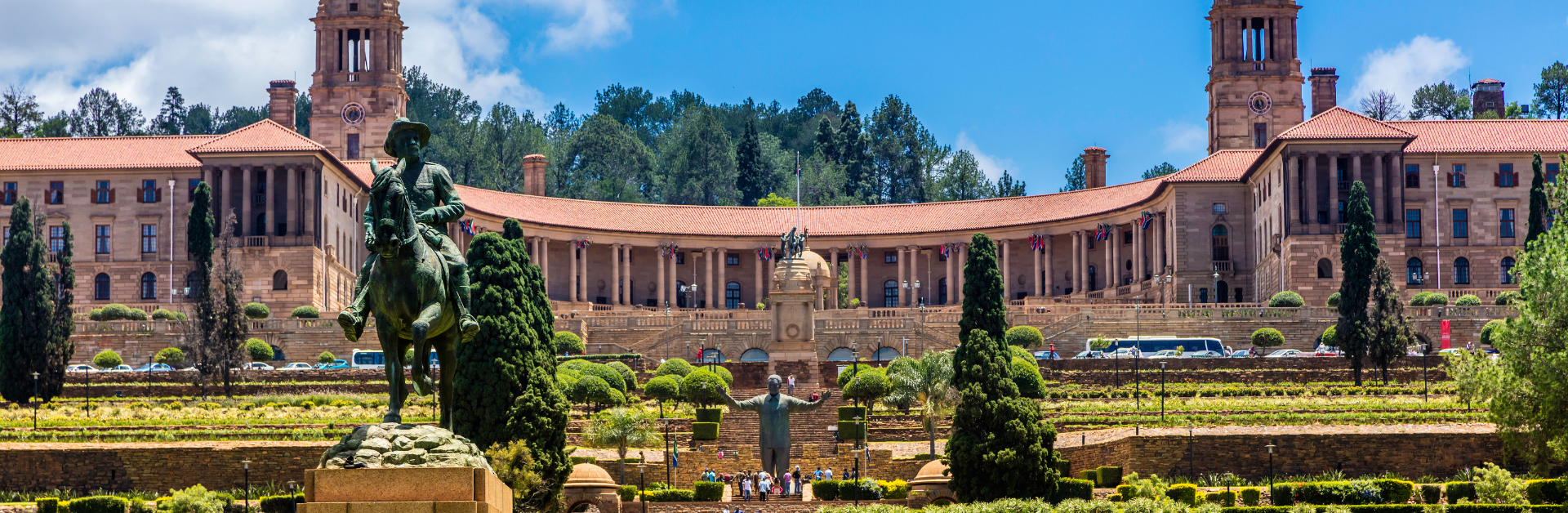
Matamela Cyril Ramaphosa was born on 17 November 1952 in Johannesburg. His family was moved from Western Native Township to Soweto in 1962, where he attended Tshilidzi Primary School. He completed high school at Mphaphuli High School in Sibasa, Venda in 1971.
He registered to study law at the University of the North in 1972, where he became involved in student politics, joining the South African Student Organisation (SASO) and the Black People’s Convention (BPC). He was detained in solitary confinement for 11 months in 1974 under Section 6 of the Terrorism Act for organising pro-Frelimo rallies. He was detained for the second time and held for six months in 1976 following the Soweto student uprising.
While a law clerk for a Johannesburg firm of attorneys, he continued his studies through the University of South Africa (UNISA) obtaining his B. Proc degree in 1981. He then joined the Council of Unions of South Africa (CUSA) as a legal advisor. In 1982, at the request of the Council of Unions of South Africa (CUSA) he founded the National Union of Mineworkers (NUM) with James Motlatsi and Elijah Barayi, and became the union’s first General Secretary. He was instrumental in building NUM into the most powerful union at the time, with membership rising from 6 000 to 300 000 during his tenure. He led mineworkers in one of the biggest strikes in South Africa’s history in 1987.
As NUM General Secretary he was instrumental in the establishment of the Congress of South African Trade Unions (COSATU), and played a prominent role in the Mass Democratic Movement (MDM) when COSATU joined forces with the United Democratic Front (UDF) against the apartheid government. He went into hiding in July 1986 after the declaration of a state of emergency.
He was later appointed chairperson of the Reception Committee to receive Rivonia trialists and in January 1990 accompanied released ANC political prisoners to Lusaka, Zambia. He served as chairperson of the National Reception Committee, which coordinated arrangements for the release of Nelson Mandela and subsequent welcome rallies within South Africa.
Following the unbanning of the ANC, in 1991 he was elected ANC Secretary General at its first national conference in over 30 years. He became head of the ANC’s negotiation team at the Convention for a Democratic South Africa (CODESA) and the subsequent multi-party talks.
Following South Africa’s first democratic elections on 27 April 1994, he became a Member of Parliament and was elected as Chairperson of the Constitutional Assembly. In that position, he was responsible for overseeing the drafting of South Africa’s internationally acclaimed first democratic Constitution. In 2009, this contribution was recognised with the award of the National Order of the Baobab in Silver.
On completion of the Constitution drafting process, he left Parliament and his position as ANC Secretary General to move into business, joining New Africa Investments Limited. In 2001, he established Shanduka Group as a black-owned investment holding company, building up a diverse portfolio of listed and unlisted assets.
In 2004, he established the Shanduka Foundation, focusing on education and small business development. The Foundation, which has since changed its name to Cyril Ramaphosa Foundation, comprises Adopt-a-School Foundation, Black Umbrellas and the Cyril Ramaphosa Education Trust.
He was a member of the United Nations Global Leadership Group that advised the Secretary General’s Special Representative on Business and Human Rights.
He has received several awards. He was awarded the Olof Palme prize in October 1987 in Stockholm. In October 1991 he was a visiting Professor of Law at Stanford University in the United States. He has received honorary doctorates from the University of Natal, the University of Port Elizabeth, the University of Cape Town, the University of the North, the University of Lesotho, the University of Venda and the University of Massachusetts (USA).
He was the first Deputy Chairman of the Commonwealth Business Council. He was Vice Chairman of the Global Business Coalition on HIV/AIDS.
Ramaphosa was appointed, along with former Finnish President Maarti Ahtisaari, as a weapons inspector in Northern Ireland. He also sat on the International Commission of Intervention and State Sovereignty and the UN Secretary General’s Panel on International Support to NEPAD.
He was appointed Deputy Chairperson of the National Planning Commission in 2010, a body created to draft a long-term national development plan for South Africa.
In December 2012, he was elected ANC Deputy President at the ANC’s 53rd National Conference in Mangaung. He was appointed Deputy President of the Republic of South Africa on 25 May 2014. In December 2017, he was elected ANC President at the 54th National Conference in Johannesburg, and re-elected as ANC President at the 55th National Conference in December 2022
President Cyril Ramaphosa was sworn in as President of the Republic of South Africa on Thursday 15 February 2018 following the resignation of President Jacob Zuma.
As President of the Republic of South Africa, President Ramaphosa assumed, in May 2018, the co-Chairship of the Commission on the Future of Work set up by the International Labour Organisation.
Following the 2024 national and provincial elections, he was re-elected as President of the Republic by the National Assembly on 14 June 2024.
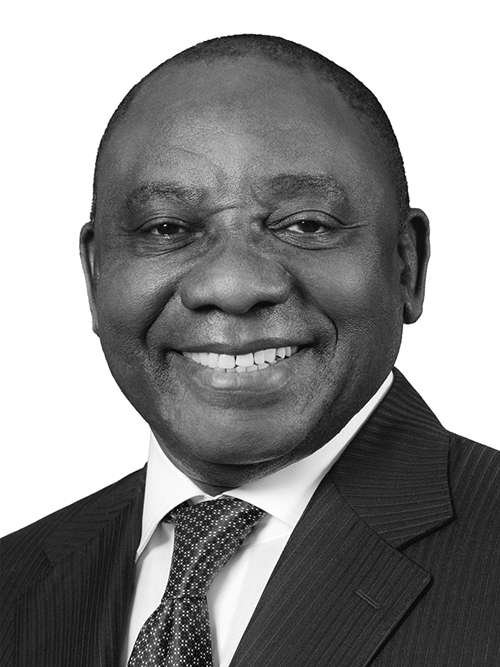
Deputy President Paul Mashatile was born at Geraldsville, Pretoria, in Gauteng Province, on 21 October 1961.
During his early political activism, Mr. Mashatile has held various leadership positions including joining the Congress of South African Students (COSAS) while studying at Alexandra High School. Together with other young people in Alexandra, they established the Alexandra Youth Congress (AYCO) where he later became its first President.
He went on to be elected as the General Secretary of the United Democratic Front (UDF) from 1989 until the unbanning of political parties in 1990 when the UDF was dissolved.
Owing to his political activism, he was detained under the State of Emergency regulations declared by then apartheid State President P.W. Botha and spent more than four years in prison without trail. While in prison he pursued academic studies.
In 1992 he was appointed as General Secretary of the South African Communist Party (SACP) in Gauteng, a position he held from 1992 to 2010. He was also head of political education for the ANC Pretoria-Witwatersrand-Vereeniging (PWV) region.
In addition, the Deputy President has also risen through the ranks of the African National Congress (ANC). He was elected the Chairperson of the Gauteng Province in 1992 and also elected as the Provincial Secretary of the ANC, a position he held for six years; and in 1998 he was the Deputy Chairperson of the ANC in Gauteng.
Deputy President Mashatile has vast experience in governance where he held a number of positions in Government including:
- Leader of House Gauteng Legislature from 1994 to 1996
- MEC for Safety and Security
- MEC for Housing from 1999 to 2004;
- Member of Executive Council (MEC) for Finance and Economic Affairs from 2004 to 2008
- Premier of Gauteng Province from 2008 to 2009
- Deputy Minister of Arts and Culture from 2009 to 2010
- Minister of Arts and Culture from 2010 to 2014
- Chairperson of Appropriation Committee in Parliament 2014 – 2016
In 2017 he was elected the Treasurer-General of the Party at its 54th National conference, during his tenure as the Treasurer-General he also acted at the Secretary-General and Deputy Secretary- General of the ANC.
He was sworn in as Deputy President of the Republic of South Africa on 07 March 2023 following his appointment to this role by President Cyril Ramaphosa. As Deputy President of South Africa, he has been delegated responsibilities as follows:
- Leader of Government Business in Parliament.
- Leading Government effort to fast-track land reform and the coordination of Government programmes to accelerate land reform and agricultural support.
- Implement Rapid Response interventions on service delivery and trouble-shooting in service delivery hotspots.
- Assisting the President in the roll-out of the District Development Model through effective coordination of the different spheres of government which will improve the functioning of municipalities and address community concerns.
- Leading the South African National AIDS Council (SANAC) and the country's integrated response to the challenges of HIV and AIDS.
- Special Envoy on South Sudan and leading peace missions on the continent as required.
- Leading the National Human Resource Development Council and fostering collaboration between government and social partners towards addressing the shortage of skills in critical sectors of the economy.
- Promoting Social Cohesion Initiatives with a particular focus on Traditional and Khoi-San Leaders, as well as Military Veterans.Deputy President Paul Mashatile also chairs the following Cabinet Committees.
- Governance, State Capacity and Institutional Development
- Justice, Crime Prevention and Security.
Deputy President Mashatile was married to Manzi Mashatile who passed on in 2020. In March 2023, he got married to Humile Bogatsu, who is now Mrs Mashatile.
Mr Mashatile has six children: Palesa, Tinyiko, Thabiso, Ayanda, Zodwa and Goapele.
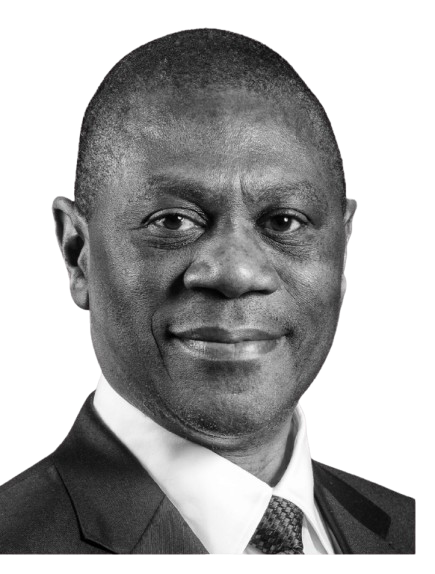
Ms. Khumbudzo Ntshavheni is the Minister in the Presidency as from 06 March 2023. She is responsible for State Security, Government Communications and Information System, Statistics South Africa, and any other responsibilities that will be assigned by the President from time to time.
She previously held portfolios of Minister of: Communications and Digital Technologies (05 August 2021-06 March 2023); Small Business Development (30 May 2019 – 05 August 2021); and Presidency: Performance Monitoring and Evaluation (acting January 2021 – 05 August 2021).
She holds an MBA Degree from the University of Bradford, United Kingdom. She also holds several undergraduate and post graduate degrees from the University of Johannesburg. She held different positions in both the public service and private sector. She started her career as a lecturer at the University of South Africa (UNISA).
She was the first female and youngest Spokesperson of a Premier in South Africa. She also worked as a Chief Information Officer in Limpopo. Minister Ntshavheni was once the youngest Municipal Manager in South Africa when she worked for Ba-Phalaborwa Municipality. She was also the Chief Operations Officer at the State IT Agency (SITA). Before her election to the National Assembly and subsequent appointment as Minister, she was a successful entrepreneur in various sectors including agriculture, FMCG, ICT and transport.
She also served in several boards. Her focus in the Communications and Digital Technologies portfolio was to fast track implementation of catalytic projects to bridge the digital divide and achieve access to internet by all South Africans; and use the communications and technology sector to build better societies with equal economic opportunities. In her first 6 months in that position, she drove the conclusion of some of South Africa’s long outstanding ICT and broadcasting projects such as the release of the IMT Spectrum and the Broadcast Digital Migration- switching of analogue signals in 5 of the 9 Provinces.
In that role, she also facilitated:
-Social obligations for IMT Spectrum licensees to connect over 18,000 schools and +3500 clinics and hospitals amongst others;
-the launch of the Artificial Intelligence Institute of South Africa in partnership with institutions of higher learning;
- the development and launch of applications platform for African developed digital products known as DigiTech;
- the remodelling of the SA Connect programme to include community connectivity through the roll-out of over 36, 000 community wi-fi hotspots in between 2023 and March 2025.
-Set in fast-tracked motion, the corporatisation of the Postbank and its conversion to a State bank; and
-Facilitated the development and implementation of the Post Office of Tomorrow.
While she was a Minister of Small Business Development, she led the development and adoption of the Township and Rural Entrepreneurship Programme (TREP) that meaningfully supported businesses to access funding, markets for their products and enterprise development services. She led the placing of over 200 SMME developed/ made products on the shelves of large retail and clothing stores.
She coordinated and overseen government and private sector support to small businesses during the Covid-19 pandemic. During the period when she acted as Minister in the Presidency, she coordinated and led the government communications during the deadliest strain of the COVID-19 virus and the July 2021 Riots.
She remains passionate about the role of entrepreneurship and ICTs in driving South Africa’s economic development. She is a member of the National Assembly of South Africa and a member of the National Executive Committee and National Working Committee of the African National Congress. She is also a member of the Prayer Women’s League of the Evangelical Lutheran Church of Southern Africa.
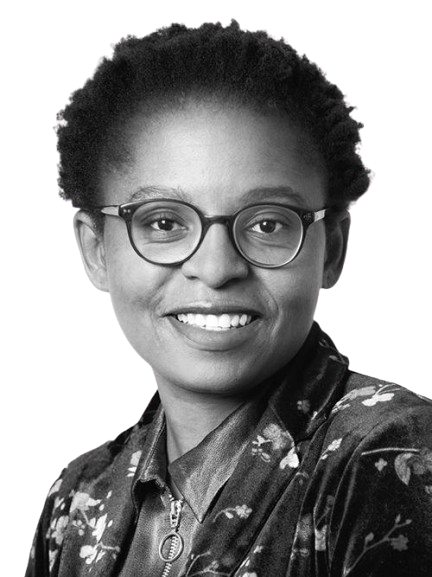
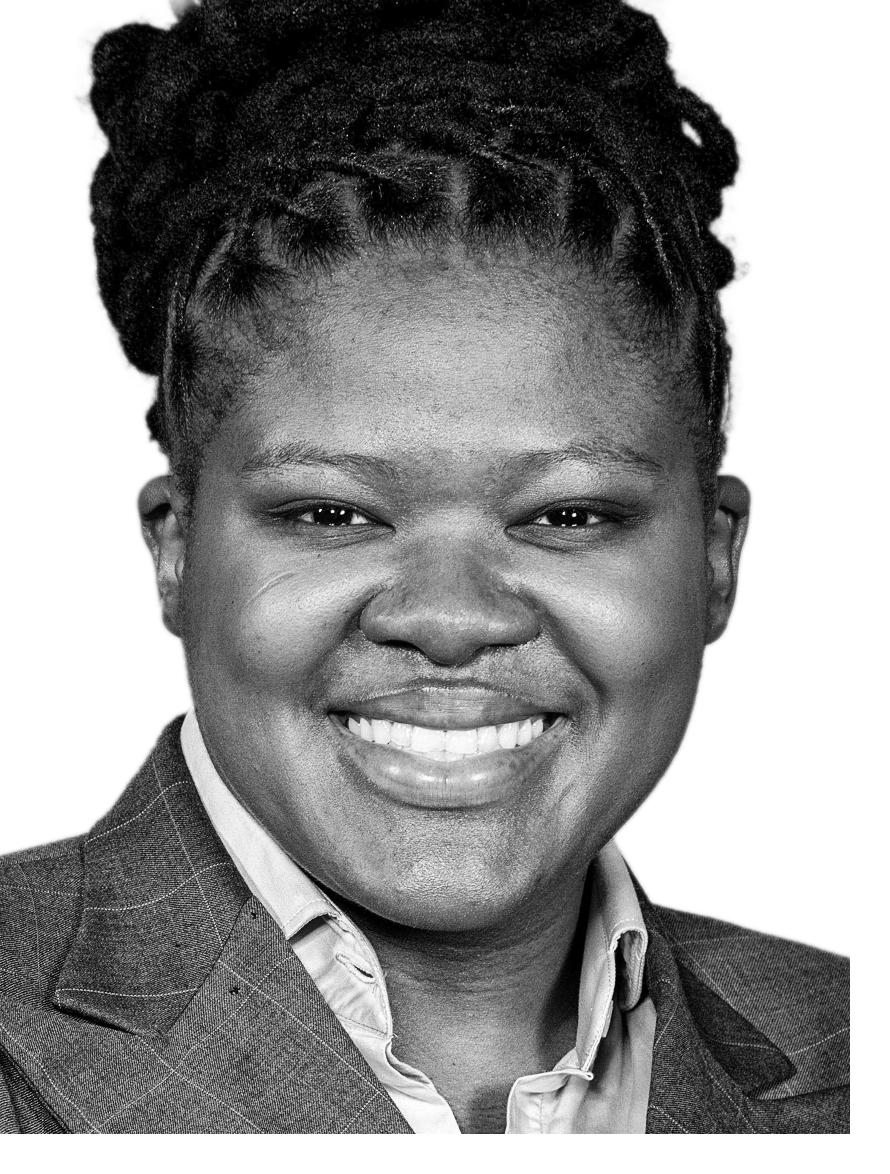
Ms Nonceba Mhlauli was appointed Deputy Minister in The Presidency of the Republic of South Africa by His Excellency President Cyril Ramaphosa with effect from 30 June 2024, following the 7th National and Provincial Election in South Africa, in May 2024.
Deputy Minister Mhlauli has vast experience in the national government sphere, particularly in The Presidency, where she previously served as the Spokesperson for the Ministry in The Presidency from 2019 to 2023 and went on to be a Communications Specialist in the Department of Communications and Digital Technologies (DCDT).
Preceding this, Deputy Minister Mhlauli was the Head of Communications and Spokesperson for the African National Congress (ANC) Caucus in Parliament from 2016 to 2019.
The Deputy Minister also worked as a Policy Researcher for the ANC Caucus in the Western Cape Legislature and as an Economic Researcher for the Southern African Clothing and Textile Workers Union (SACTWU) prior to her appointment as ANC Caucus Head of Communications.
With her extensive experience in research and academia, she was appointed to the Council of the South Cape TVET College serving on the Finance, Audit and Risk Committees in 2019 until 2024, and also served on the TVET Council of Governors (CGC) as Deputy Secretary General until her appointment as Deputy Minister.
Her professional life saw her being elected as the Provincial Executive Committee Member of the Progressive Professionals Forum (PPF) in the Western Cape from 2016 to 2019.
Deputy Minister Mhlauli holds a Master of Arts in African Language Studies and Politics from Rhodes University and is currently pursuing her PhD in Communications at the University of South Africa.
She serves as a Member of the National Executive Committee (NEC) and National Working Committee (NWC) of the ANC as elected in December 2022. Her previous political roles as a youth activist also include serving as National Convener of the African National Congress Youth League (ANCYL) and the National Executive Committee of the South African Student Congress (SASCO).
Guided by the Constitution and a commitment to serving the nation of South Africa through Leadership, Accountability and Action.